Accessible Cooking with Swahili Voice Guidance and Braille
- Share
- publisher
- ALK Team
- Issue Time
- Oct 31,2026
Summary
Swahili voice guidance, tactile Braille markings and local-language controls can provide additional ways for blind and low-vision users to interact with an electric pressure cooker. This article highlights practical considerations for buyers, distributors and accessibility organizations.
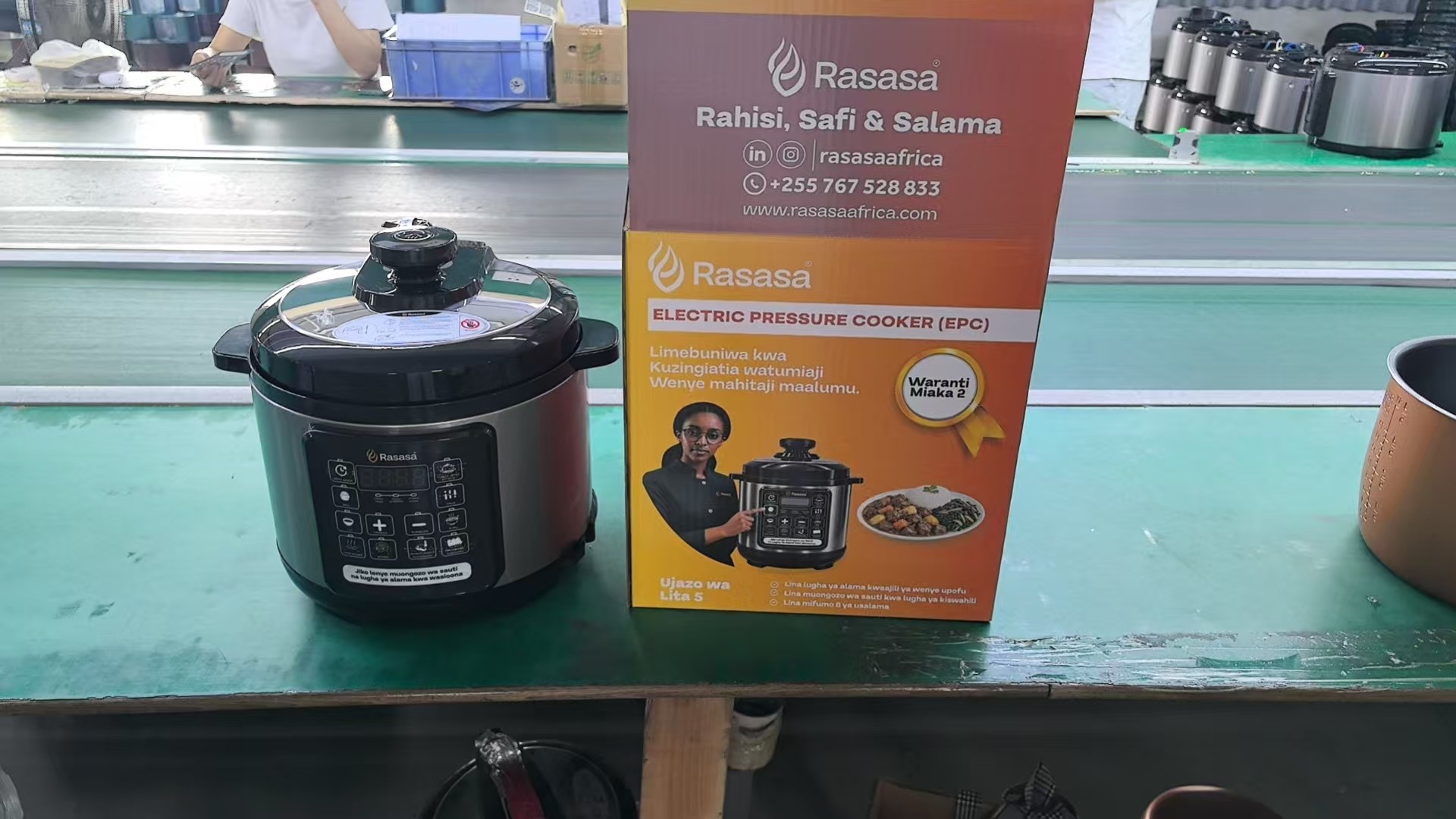
A familiar language and controls that can be identified by touch can make a meaningful difference in everyday cooking. For people who are blind or have low vision, these features offer additional ways to interact with an appliance beyond reading a display.
The electric pressure cooker shown here brings these ideas together. Its packaging identifies Swahili voice guidance and Braille markings, while the control panel combines raised dots, cooking icons, and Swahili text.
A Familiar Language for Everyday Tasks
Accessible appliances need to communicate in a language their users understand. For Swahili-speaking households, spoken guidance in Swahili can make information easier to follow.
The cooker’s panel also uses Swahili labels for functions including rice, porridge, soup, and steaming. Local-language text and audio help connect the appliance with familiar cooking routines.
Voice guidance provides spoken information during use. Buyers should confirm which selections, operating states, and alerts the specific model announces when evaluating a sample.
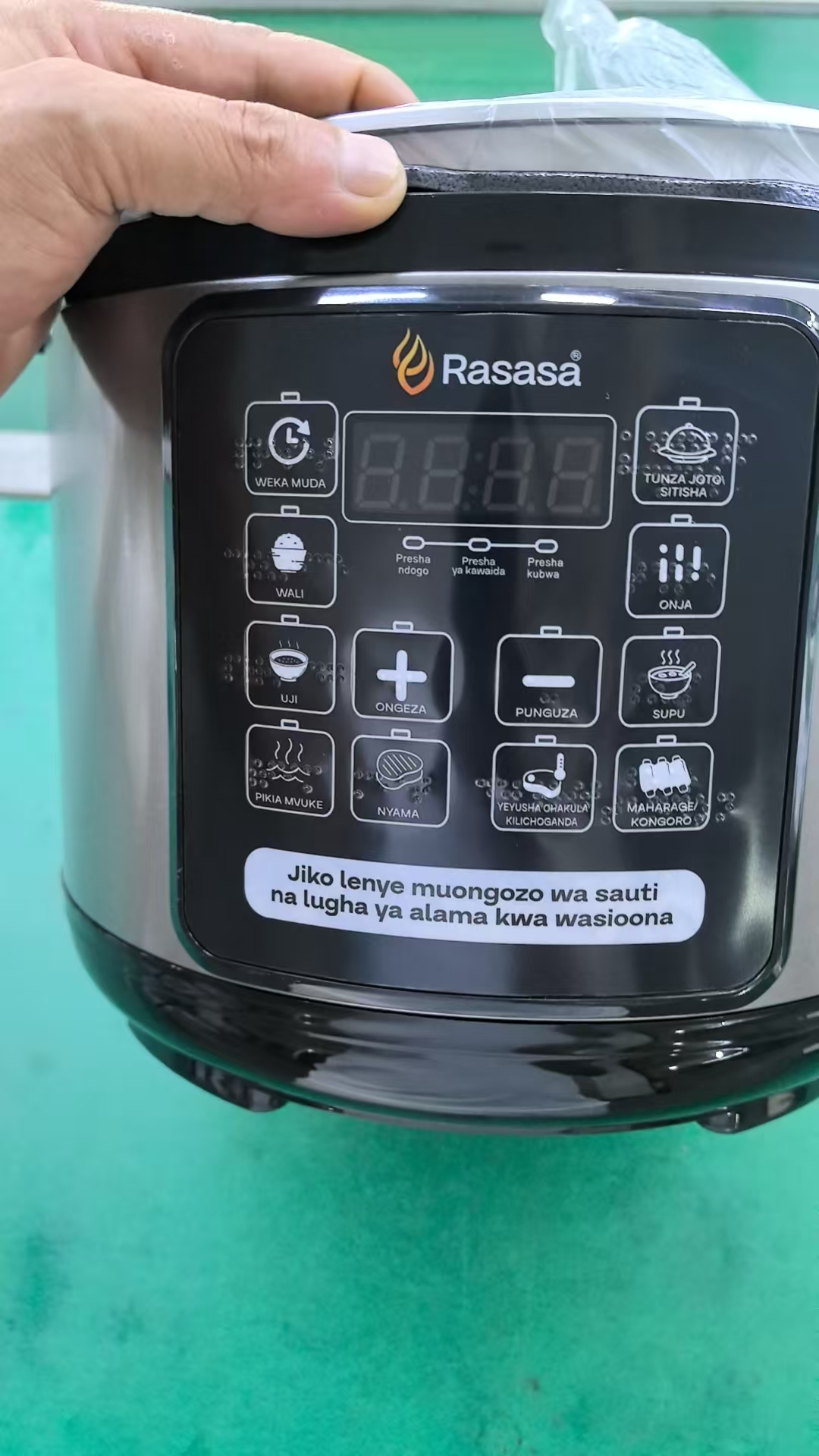
Swahili-language controls and tactile dot markings on the sample cooker panel.
Another Way to Identify Controls
Raised dot markings appear beside the cooker’s controls. For users who read Braille, accurate labels placed consistently can help distinguish functions by touch.
Tactile information and spoken guidance contribute in different ways. Touch can help users locate controls, while audio can communicate information about operation. A useful design considers how these features work together throughout the cooking process.
User evaluation matters here. The accuracy of the Braille, the clarity of the audio, and the ease of finding individual controls should all be checked with intended users.
Accessibility Beyond the Control Panel
The supplied photographs show the cooker alongside its printed instructions, retail packaging, and packing stages. These elements are also part of the user experience.
Clear instructions can help users become familiar with an appliance before cooking. Consistent terminology across the panel, audio, and manual can make that learning process easier.
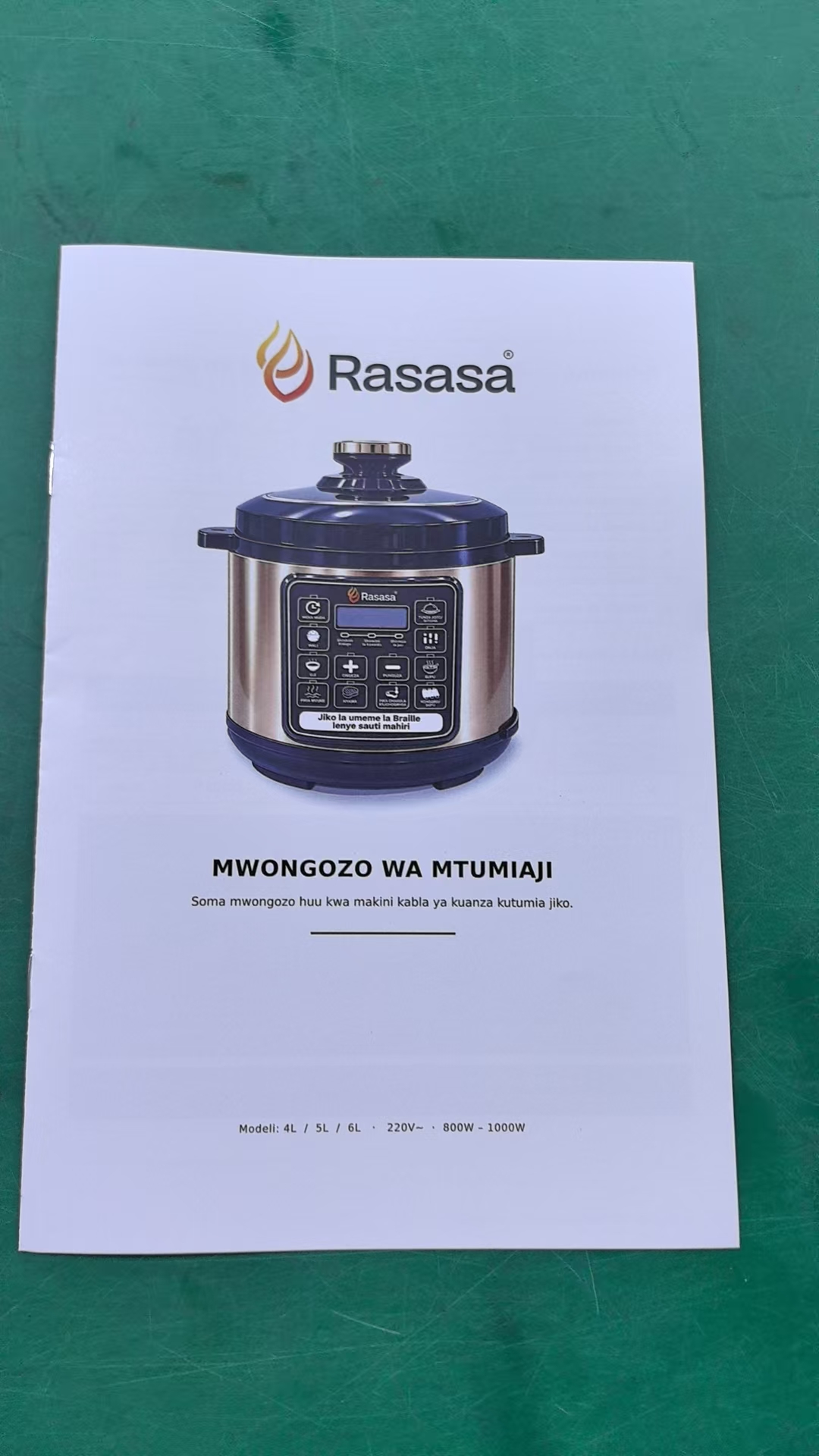
A Swahili-language user manual supplied with the market-specific cooker sample.
For distributors and organizations sourcing accessible appliances, sample testing provides an opportunity to examine the complete experience. Can users identify the functions, understand the spoken information, confirm their selections, and locate the stop control?
These practical questions help buyers assess suitability for their customers.
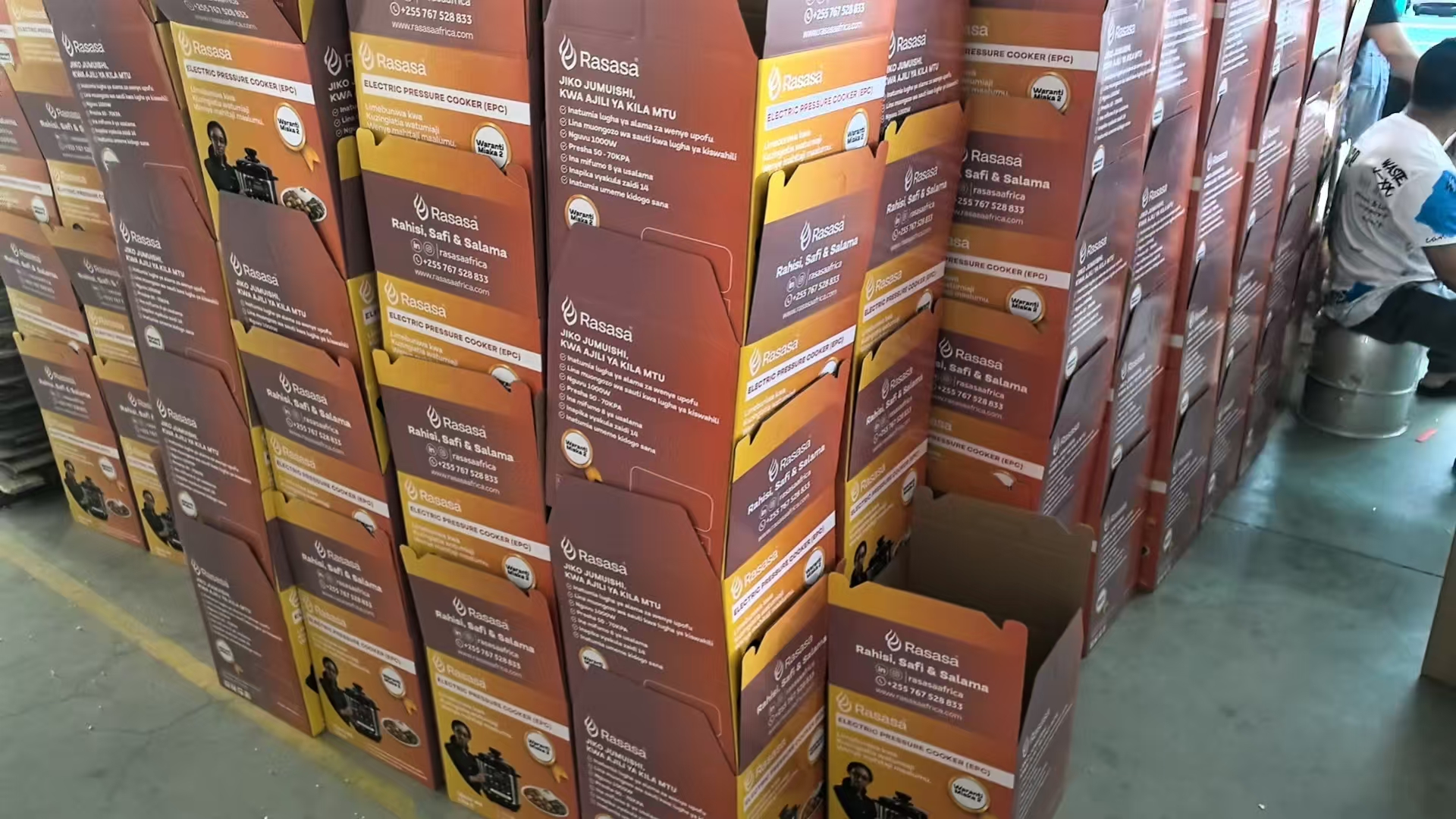
Boxed units during the packing stage.
Discuss Accessible Appliances for Your Market
Language, tactile controls, and clear operating information deserve consideration from the beginning of product selection.
ALK supplies talking and Braille household appliances for accessible living. To discuss products for your market, contact ALK with your intended users, preferred language, and sourcing requirements.